

Inflation and Interest Rates: Separating Signal from Noise
I wanted to have an argument with myself. I came away thinking that asking better questions, while accepting that the answers may remain uncertain, is part of how we help institutions make better decisions.

When Change Needs a Face
Why do we blame the person who brings difficult news? A personal reflection on change, uncertainty and our human need to give it a face.


We Have Done Our Part. What Will You Do?
I was sitting on a bus in Zaragoza when an advert caught my attention. It was not beautiful, subtle or particularly sophisticated. In fact, its most prominent visual was a large pile of dog mess.
The message read: “We invested €65 million to keep our streets clean. We are counting on you.” Beneath the image was a second line: “Don’t dirty what we clean together.”
It made me smile, but it also made me think.
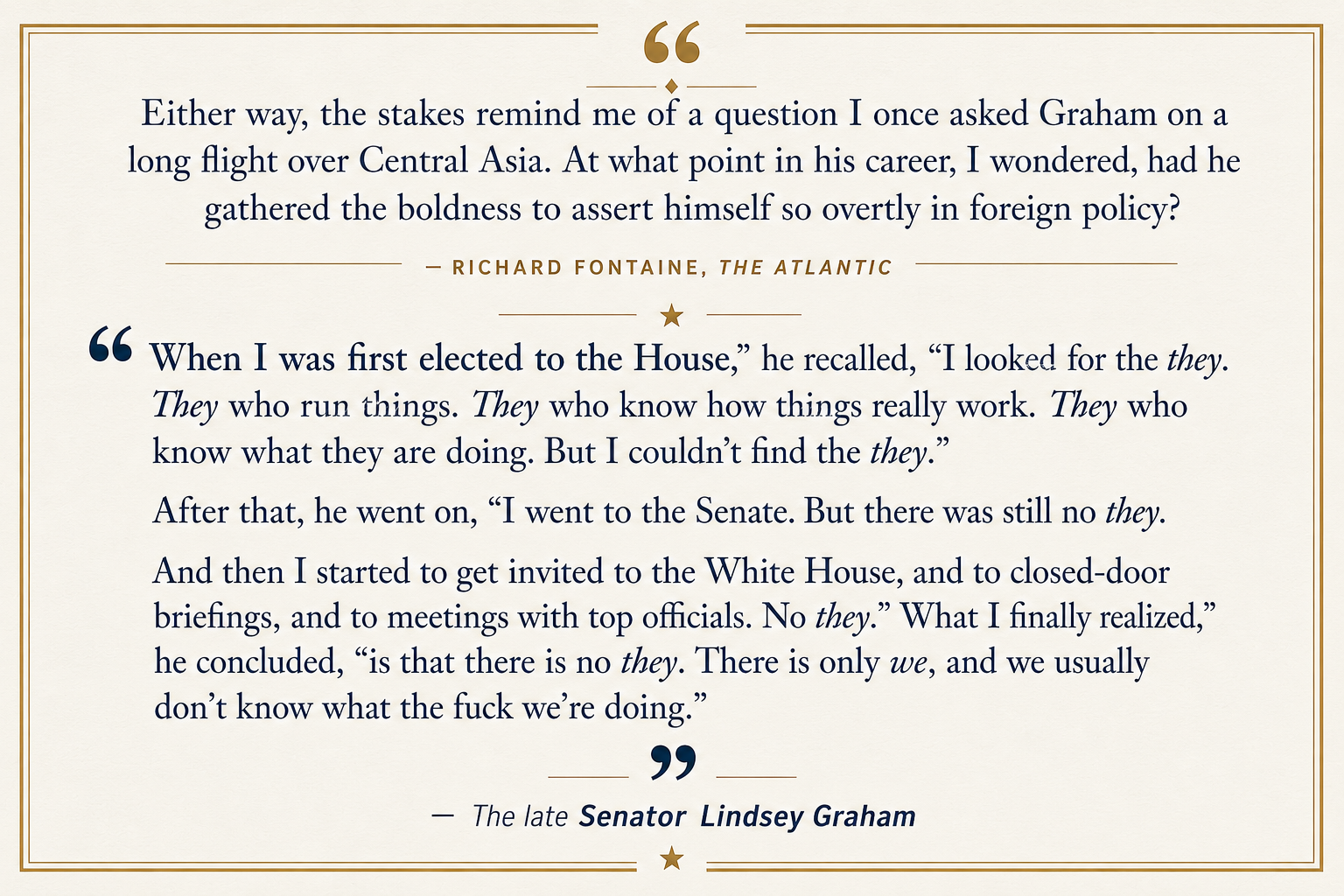
There Is No “They”
I would like to go back and speak to the younger version of myself who entered those rooms believing that everyone else had received a handbook he had somehow missed.
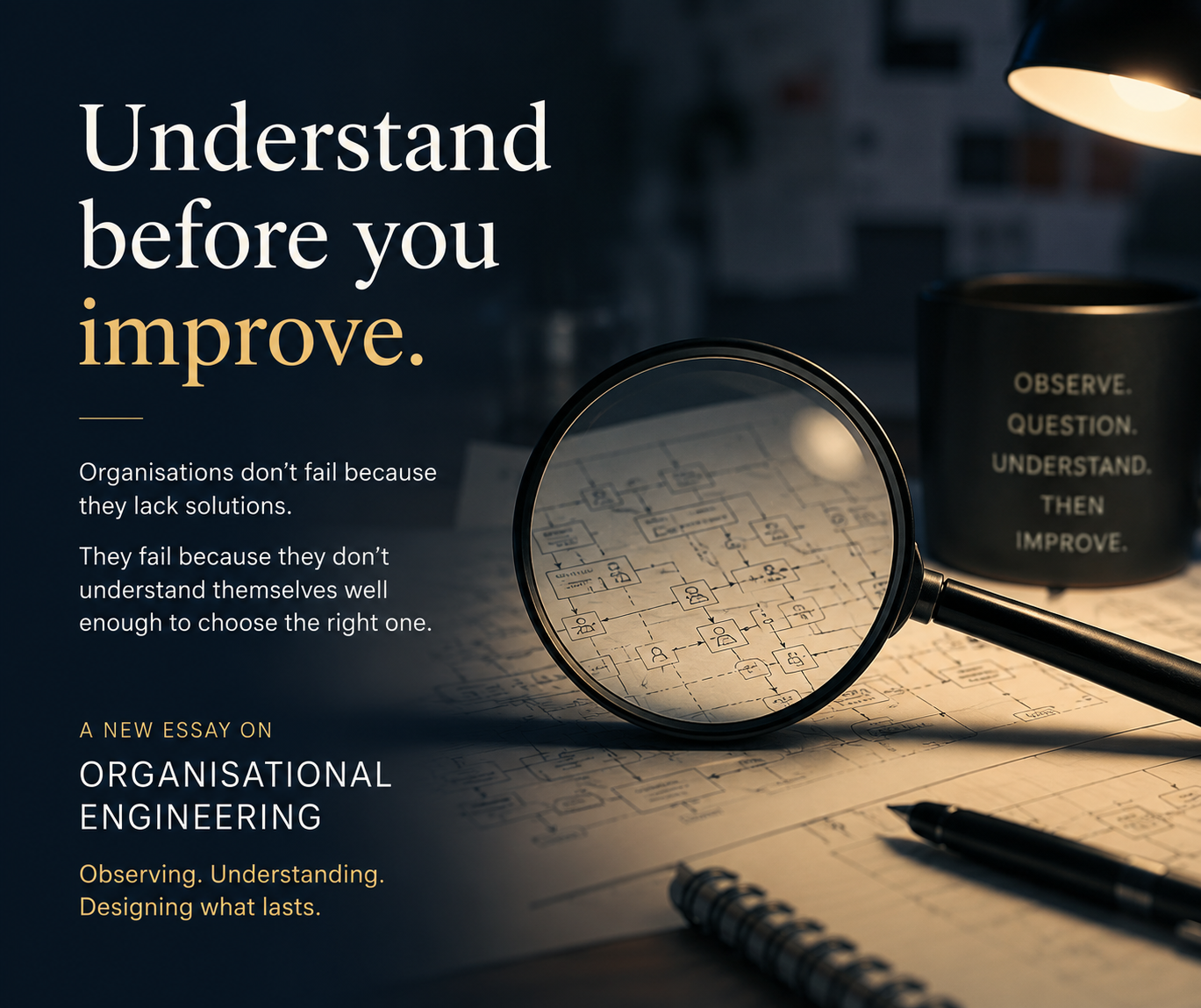
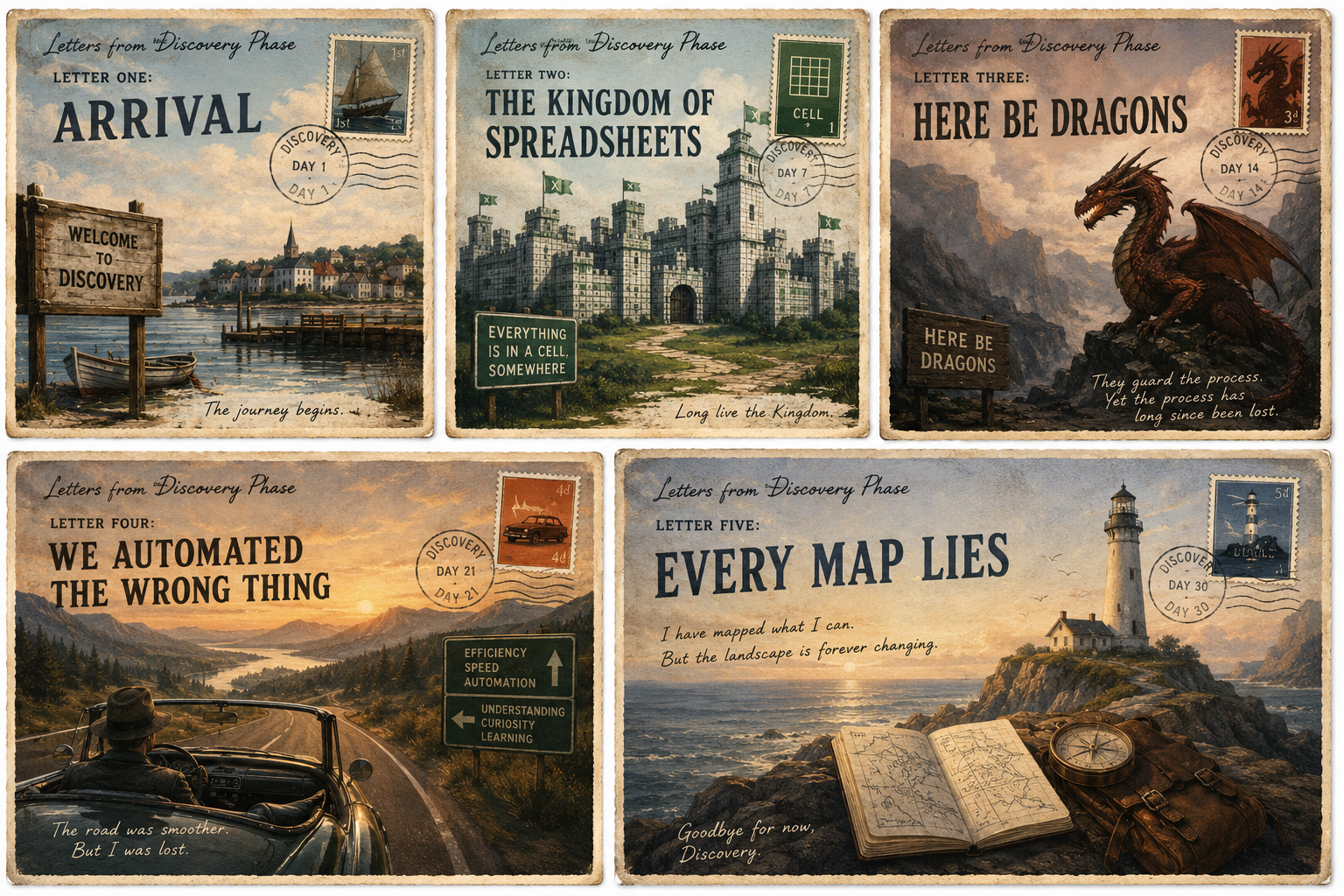
Letters from the Discovery Phase
People think discovery is about finding answers. In truth, it’s about learning to ask better questions. These are letters from the places those questions have taken me.

What Happens When the Conveyor Belt Stops?
I’m not sure we Europeans are recognising that what Max Weber called ‘the Protestant work ethic’ of work hard and be rewarded, is in conflict with both the unobtainable nature of wealth for the young, and the idea that technology works instead of us. What do we get if we work hard now?
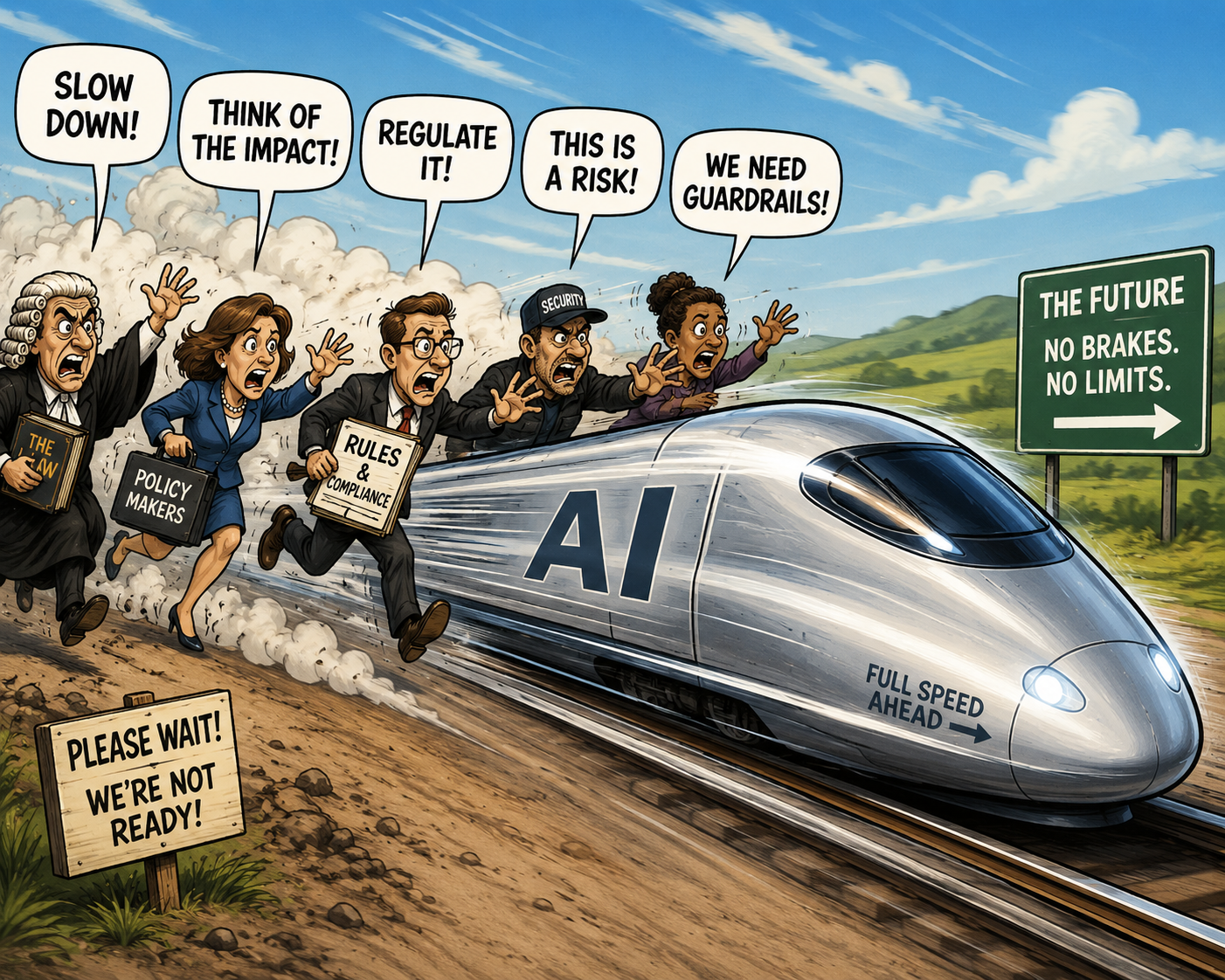
What would we fix if AI didn’t exist?
Organisations are getting excited about intelligence while often lacking agreement on process, ownership, memory and purpose. AI becomes the lens through which we discover those older problems.
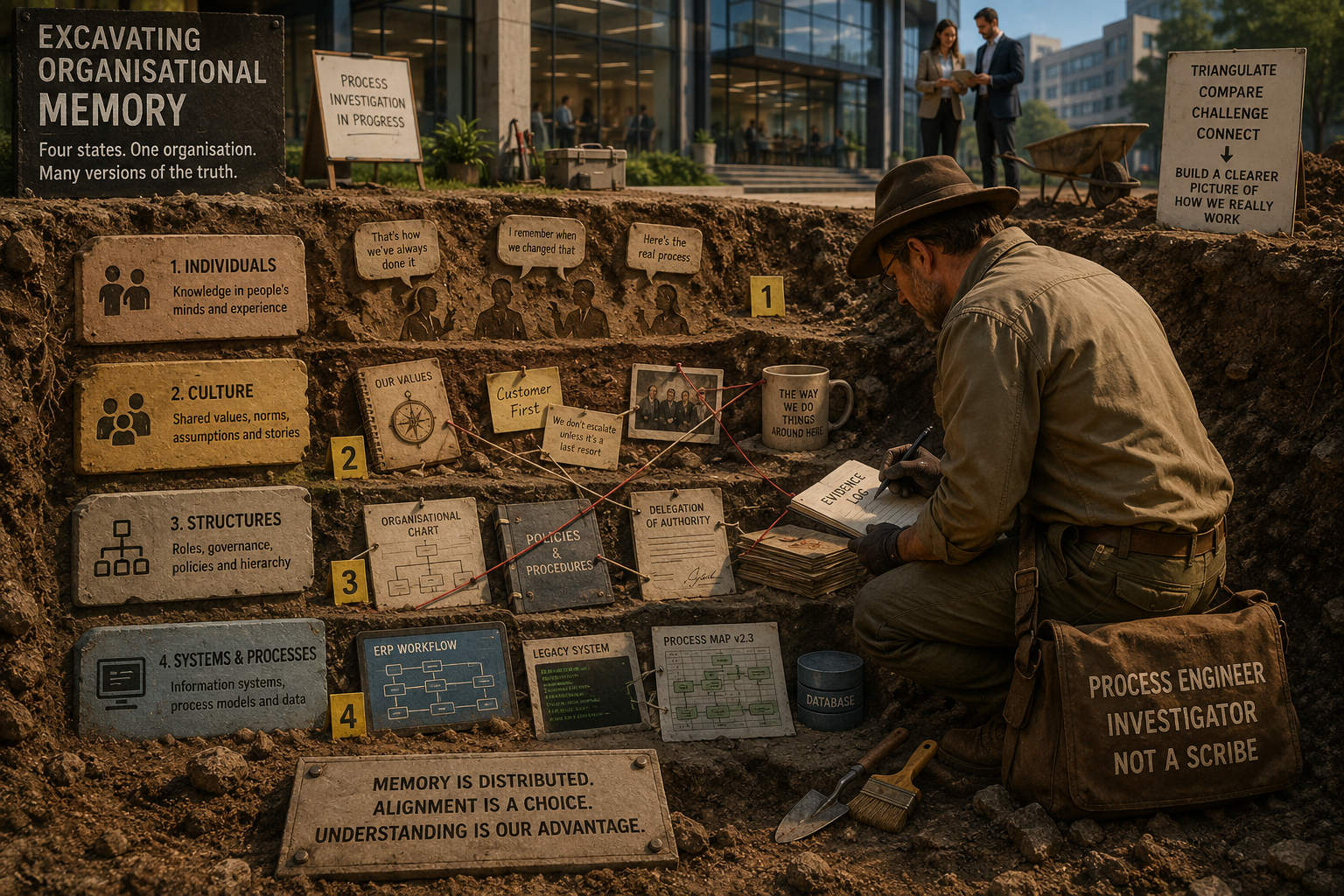
The Reliability of Corporate Memory
An organisation may still possess the process, but it no longer knows where the memory resides.
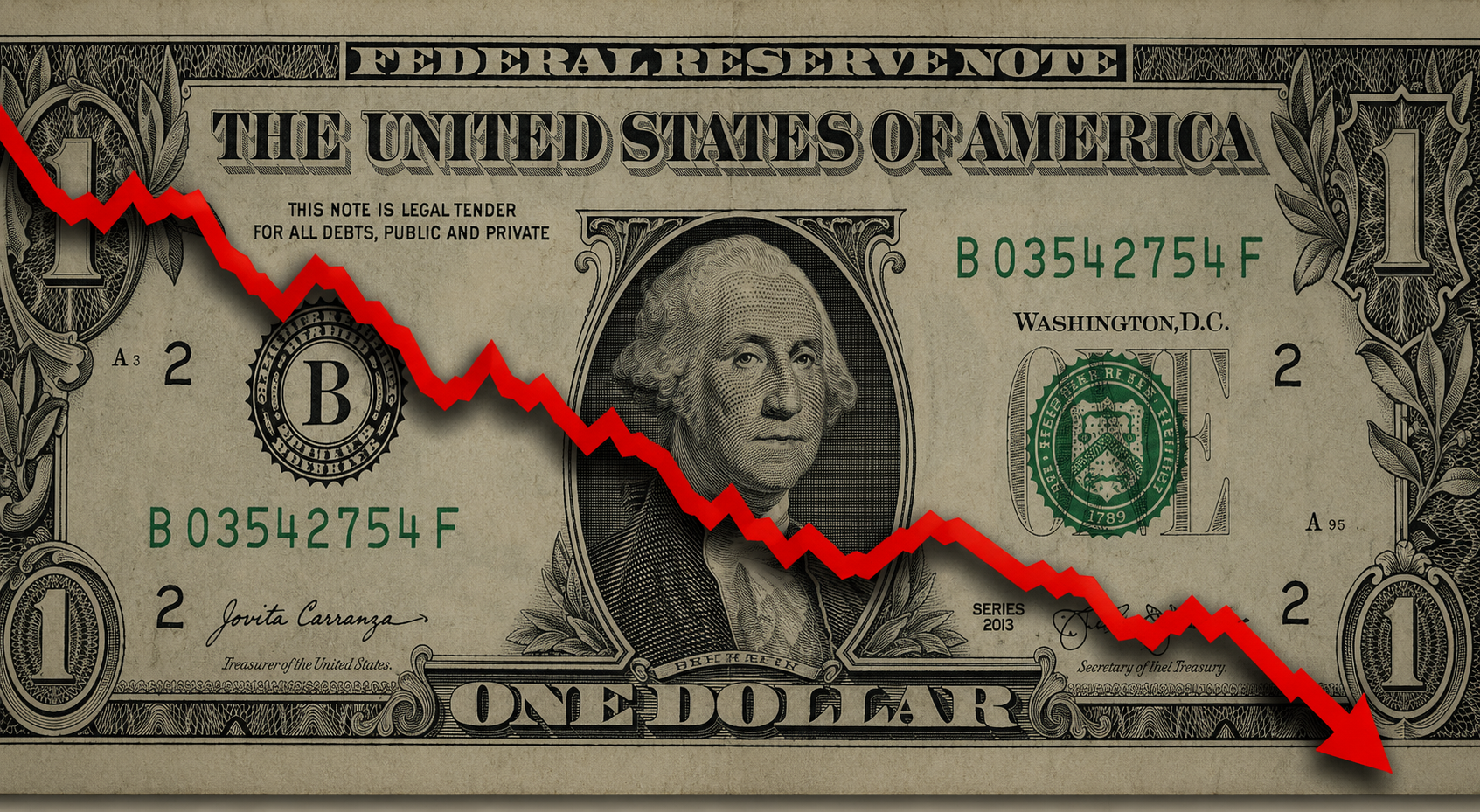
Something Lurks Just Out of Sight
Private credit, lending conducted outside the traditional banking system, has expanded at extraordinary speed over the past decade and now represents roughly $3 trillion globally, with projections suggesting it could reach $4.5 trillion by 2030. At first glance this sounds like an abstract concern confined to finance professionals and economists, but private credit increasingly finances deeply ordinary parts of economic life.

The Power of Why
I think every piece of work should carry the question “why” from the very beginning. Before procurement. Before governance. Before people become emotionally committed to the shape of something that might not make sense yet.

Ambiguity Leaks Energy
I think we talk about pressure on organisations the wrong way.
We talk about money. Headcount. Time. Skills gaps. Systems. Demand.
But I am starting to think one of the biggest drains on human effort is ambiguity.
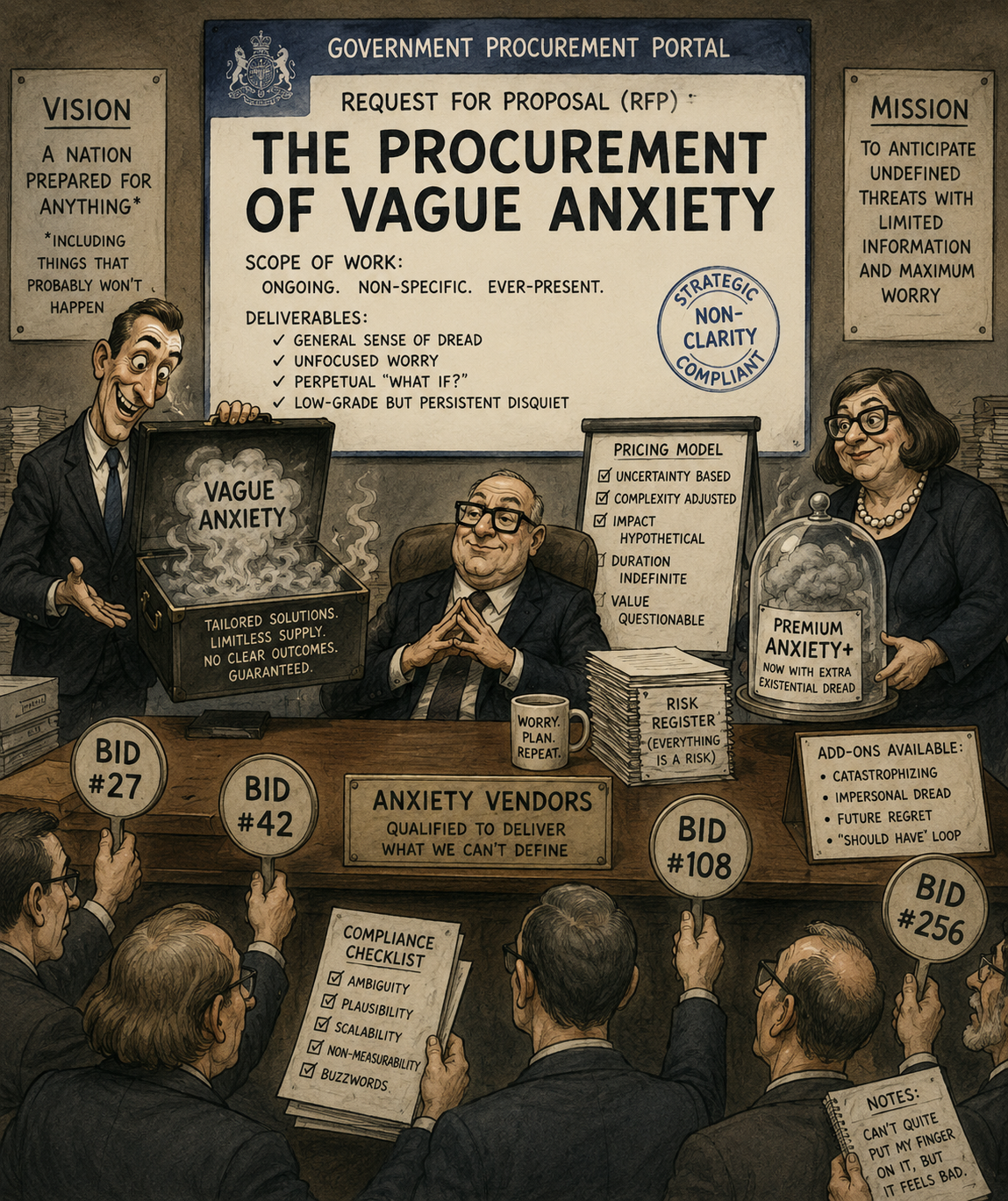
The Procurement of Vague Anxiety
Modern organisations are full of highly capable professionals attending meetings about problems they can sense perfectly well but cannot describe in plain English.

When Decisions Aren’t
Committing to a decision means accepting the possibility you might be wrong. Remaining permanently critical preserves the much safer position of theoretical intelligence. The undecided person can always claim they saw the flaw coming. The person who commits loses that luxury.

Game Over?
The problem is not that humans create models, frameworks or theories. We have always done that. The problem begins when we forget they are models.
A map is not the terrain.
A forecast is not the weather.
A governance diagram is not an organisation.
And a game is not society.
Modern institutions increasingly mistake representation for reality. Dashboards replace understanding. Metrics replace judgement. Governance replaces leadership. We convince ourselves that if enough data is collected, enough workflows mapped, enough risk registers maintained, then uncertainty itself can be eliminated.